The Trek of a Lifetime
I was standing knee-deep in jungle foliage, somewhere deep within a place called the Bwindi Impenetrable Forest, when I suddenly felt something brush across the back of my hiking pants.
“Look what is behind you,” our guide Emmanuel said in a soft voice as his slowly lifted his chin.
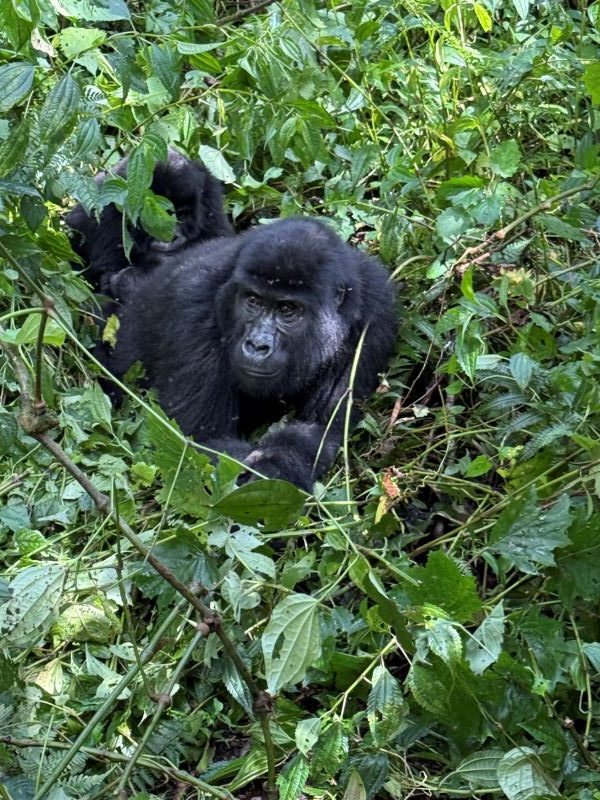
I looked over my shoulder to see an adolescent mountain gorilla gently moving past me. Rather than panic, I felt a wonderful sense of calm. This animal meant no harm. He treated me as though I belonged there. Almost as though I was part of the family.
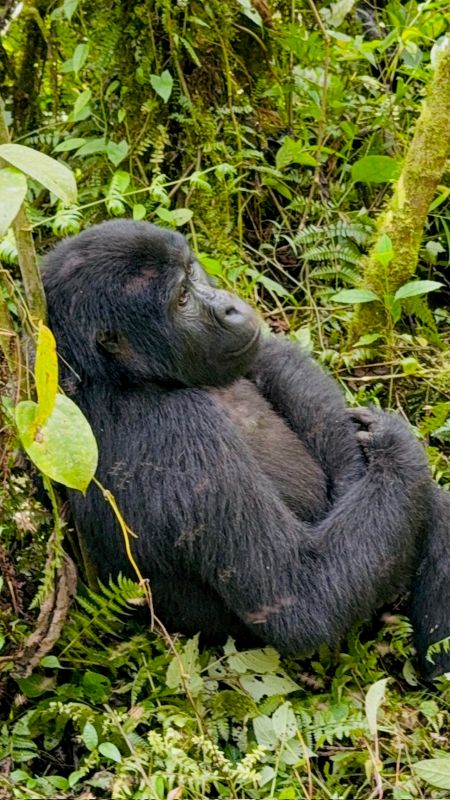
A family indeed. During a trip to western Uganda in 2025, I had the privilege of standing among a group of 14 gorillas, ranging from the Silverback leader to an infant. When I recount this experience to others, most assume I was full of fear. Nothing could be further from the truth. I experienced a feeling that I was welcome among these beautiful beasts, a guest in their jungle home.
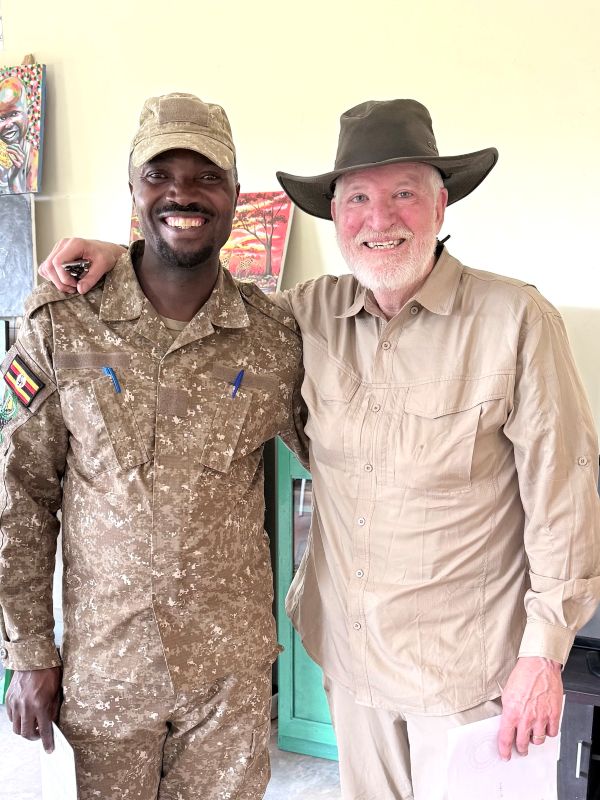
Much credit goes to Emmanuel, a ranger in Bwindi Impenetrable National Park and the area’s most trusted guide. In the past 18 years, Emmanuel has led more than 2,000 treks into the jungle. During that time, he has had zero safety incidents. He has a voice as soft and gentle as an afternoon jungle sun shower. When he speaks to the animals, it is no wonder they are filled with extreme calm.
The population of mountain gorillas stands at about 900, with half of the animals in Uganda, and the others in Rwanda and the Congo. For many years, they were victimized by poaching and border warfare. It is understandable that they feared guns, and the men who held them.
Emmanuel’s life mission is to try to help build the gorilla population while also reducing their fear of humans. A substantial part of the fees to visit the gorillas in the wild goes toward conservation efforts. Poaching is being replaced by income from responsible tourism.
We began our trek by making our way down a steep, narrow chasm that resembled a dry waterfall. The trail opened into bright sunshine, crossing a large, lush field of tea plants before descending toward the jungle floor. As we progressed, Emmanuel was in touch by radio with three trackers. These men remain in the jungle overnight, tracking the whereabouts of the gorilla family. If the gorillas moved without the men tracking them, they could be difficult to locate, especially in a place rightfully named the “Impenetrable Forest.”
As we drew closer to the area where the gorillas were located, our two armed bodyguards and the three armed trackers remained behind at a distance. Their guns were not for protection from gorillas, but rather for defense against potentially aggressive forest elephants. Our walking sticks, essentially 5-foot poles, were also left behind, lest the gorillas view them as weapons.
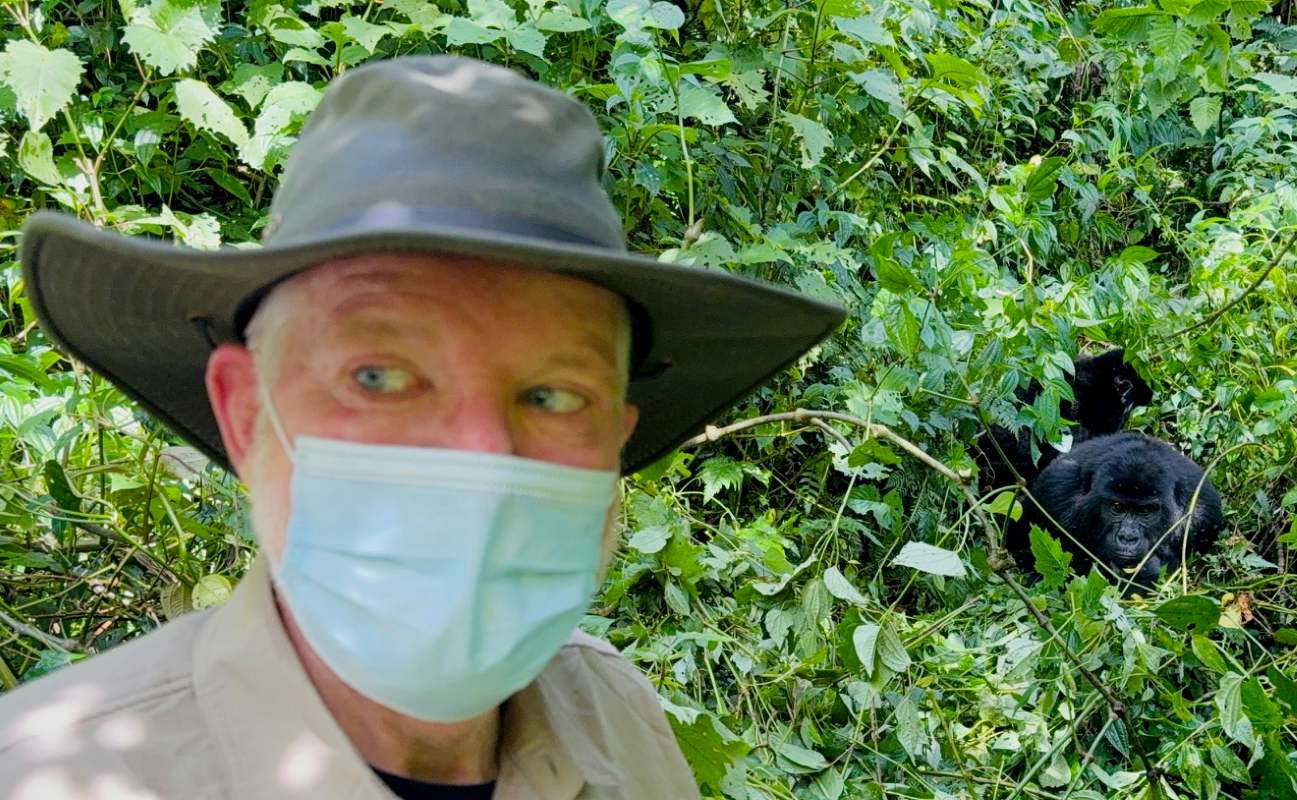
We spotted our first gorilla high in a tree, difficult to see through the brush, yet fascinating nonetheless. As we gingerly continued through the jungle, the larger family came into view. A woman and her son from France were taking photos with a nice camera. I was armed with my iPhone, and Emmanuel offered to take photos for me. I was able to simply observe, while he took amazing photos of gorillas accustomed to his presence.
Emmanuel grew up near Bwindi. He began studying gorilla behavior in the early 2000s, completing his initial ranger training in 2007. He knows the gorillas by name, and he is familiar with their mannerisms. If there were any hint of danger, he would know how to manage it. That is critical because, after all, this isn’t a zoo. These animals are in the wild, in their own habitat.
I recall one moment when the Silverback emitted a sound that resembled a bellicose grumble. “Uh-oh,” I mumbled. Emmanuel calmed me, assuring me there was no cause for alarm. “He recognizes you as another Silverback,” he said with a broad smile as he pointed to the white hair below the back of my green, wide-brim hat. I returned his smile.
The trek allows for one hour of actual time spent with the gorillas. In a sense, it’s a way for humans to not wear out their welcome.
When I completed the trip, I returned to the lodge, where my wife was reading on the front porch. She smiled as I approached her, my face aglow. “How was it?” she asked.
“Experience of a lifetime,” I said.
That assessment hasn’t changed.